CleverPoint

Module · assess

Twenty-five minutes. Four answers.

Stressonika is a standardised VR test recorded with CleverPoint 4. Everyone goes through the same sequence of breathing, tasks and rest. The ECG shows how the body met the load, the tasks show how attention and speed held up, and the facial channels add EEG and EMG. The report answers four questions that a psychologist or a coach can read without a physiologist.

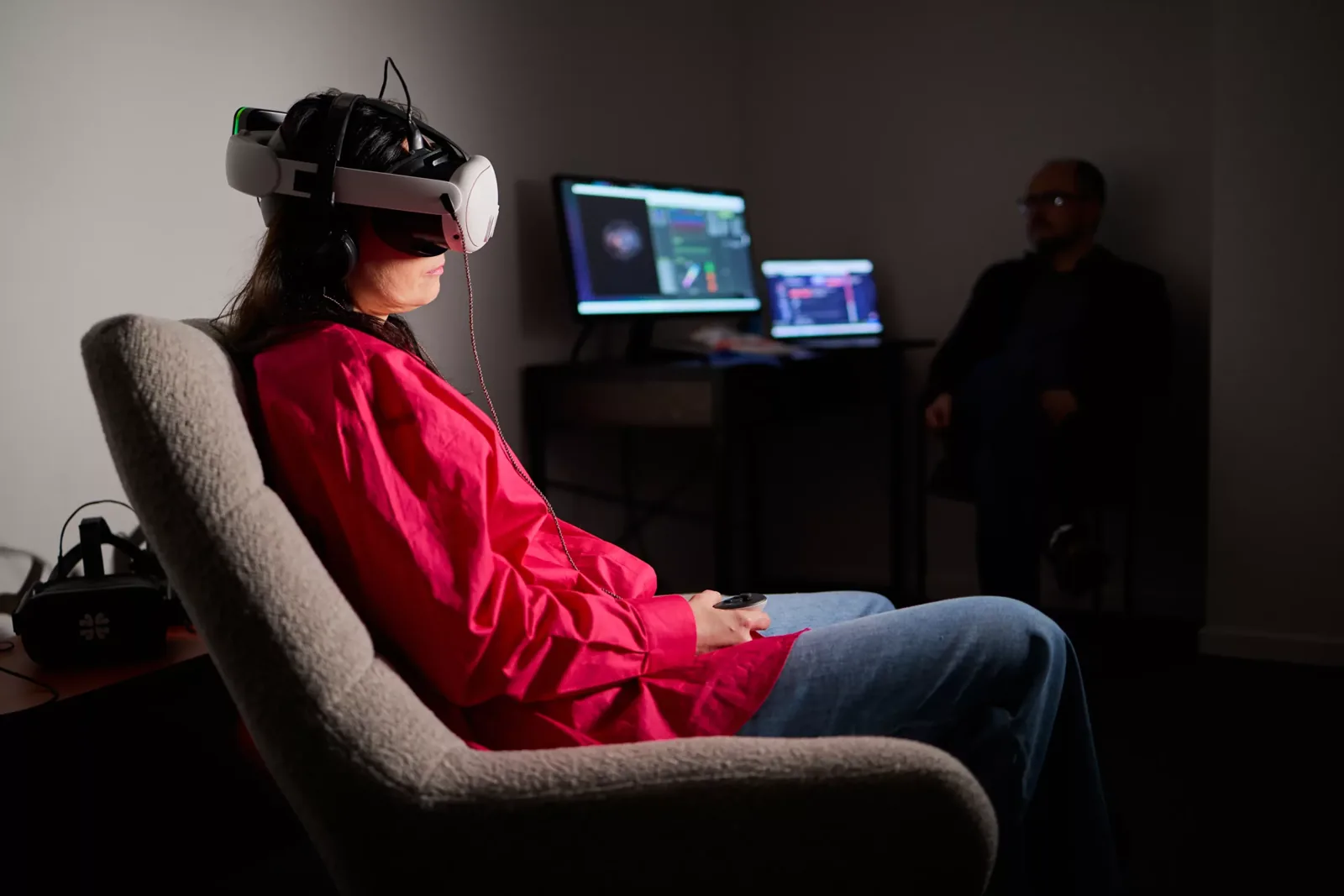
A participant in the headset during a Stressonika session, the operator at the PC behind

At a glance

Duration
About 25 minutes in the headset; median 23.7 min over 2,879 sessions
Signals
ECG, frontal EEG, eye movements and facial muscle activity, on one clock
Tasks
Paced breathing, tapping, two Stroop tasks, five Schulte tables, the Banana test, two rest breaks
Report
Web report and PDF, in three sections: the person, the specialist, the physiologist
Comparison
Every session next to the person's previous one
Test languages
English, French, Greek, Polish, Russian
Report languages
English, Polish, Russian
Data
Recorded and processed on your PC; raw files stay yours

Who it is for

  • Psychologists and coaches who want a baseline that does not rest on self-report.
  • Development programmes in which each person repeats the same check over time and keeps the results.
  • Research labs that need a fixed protocol with raw ECG, EEG and EMG behind every number.

Intended use. Stressonika describes how the body meets a standard load. It is meant for research, for personal development, and for a specialist's work with a client who chose to take the test. It is not meant for hiring, for assessing or monitoring employees, for grading or admitting students, or for conclusions about a person's emotions. In workplaces and schools it belongs only in voluntary programmes where the results go to the person, not to the employer or the teacher. Stressonika is a non-medical assessment: it does not name conditions and does not score risk.

What happens in the headset

The Stressonika room in VR: a seated figure facing a window, the Stressonika logo on the wall
The room the person sits in for the whole session.
  1. 1

    Breathing

    Two minutes of paced breathing, one with eyes open and one with eyes closed, at about six breaths a minute. How far the heart rate swings with each breath is the first measure.

  2. 2

    Load

    Tapping, two Stroop tasks, five Schulte tables and the Banana test: tempo, inhibition, tracking, visual search and choice under time pressure.

  3. 3

    Rest breaks

    Two quiet pauses of two minutes show whether the person switches off when nothing is asked of them.

The protocol, section by section →

Four questions, two kinds of answer

Trait
How fast do you switch into load?
Trait
How fully do you switch off afterwards?
Today
Did you switch to rest in the breaks?
Today
At what cost did you get through the session?

The first two repeat when the same person comes back on another day (ICC 0.64 [0.54; 0.72] and 0.70 [0.55; 0.81]) and are read as traits. The last two repeat less and are read as the state of the day; the report never merges them into one label. How we checked →

Three readers, one report

  • The person gets plain words and a few things to try.
  • The specialist (psychologist or coach) gets the four answers with the observations behind them.
  • The physiologist gets the numbers, the beat-to-beat series and the signal-quality notes.

Each new session sits next to the previous one, and the report calls a change a change only when it is larger than the smallest real change for that measure.

What is in the report →

Beyond the heart

Cognitive and motor

The tasks are scored, not just endured, and the main score of each task repeats between days.

Tapping
tempo, endurance and steadiness of the hand
Stroop
holding back the wrong press, and tracking a moving target
Schulte tables
search speed and how even it stays
Banana test
productivity, precision and flexibility, and how well the person judged their own result

EEG and EMG

The six facial channels are analysed as well, where frontal EEG shares the electrodes with eye and muscle activity: the alpha rhythm with eyes closed, blinks and facial muscle activity around the tasks. They appear in the specialist's section as observations of the day, next to the heart answers.

Your data stays with you

EVA records the session on your PC, and the report is built there too. Names stay in EVA's client list on that PC; the raw files carry only a random session identifier. A web account for clients is an option, not a requirement. Raw ECG, EEG and EMG stay accessible to CleverLab users.

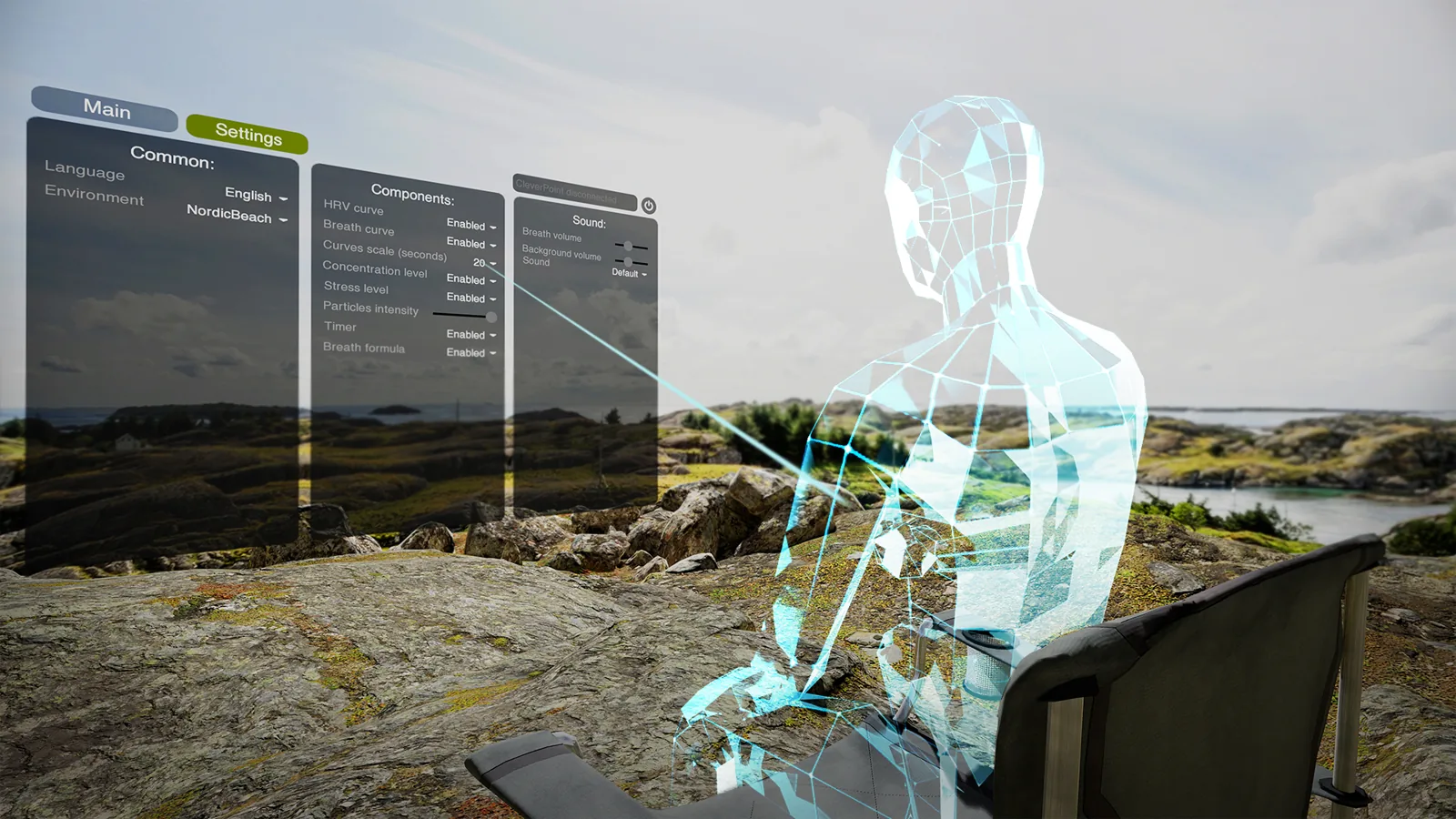
Session settings inside the headset: language, handedness and the components of the test, in front of a coastal scene
Session settings in the headset: language, handedness, components.

Measured it? Train it.

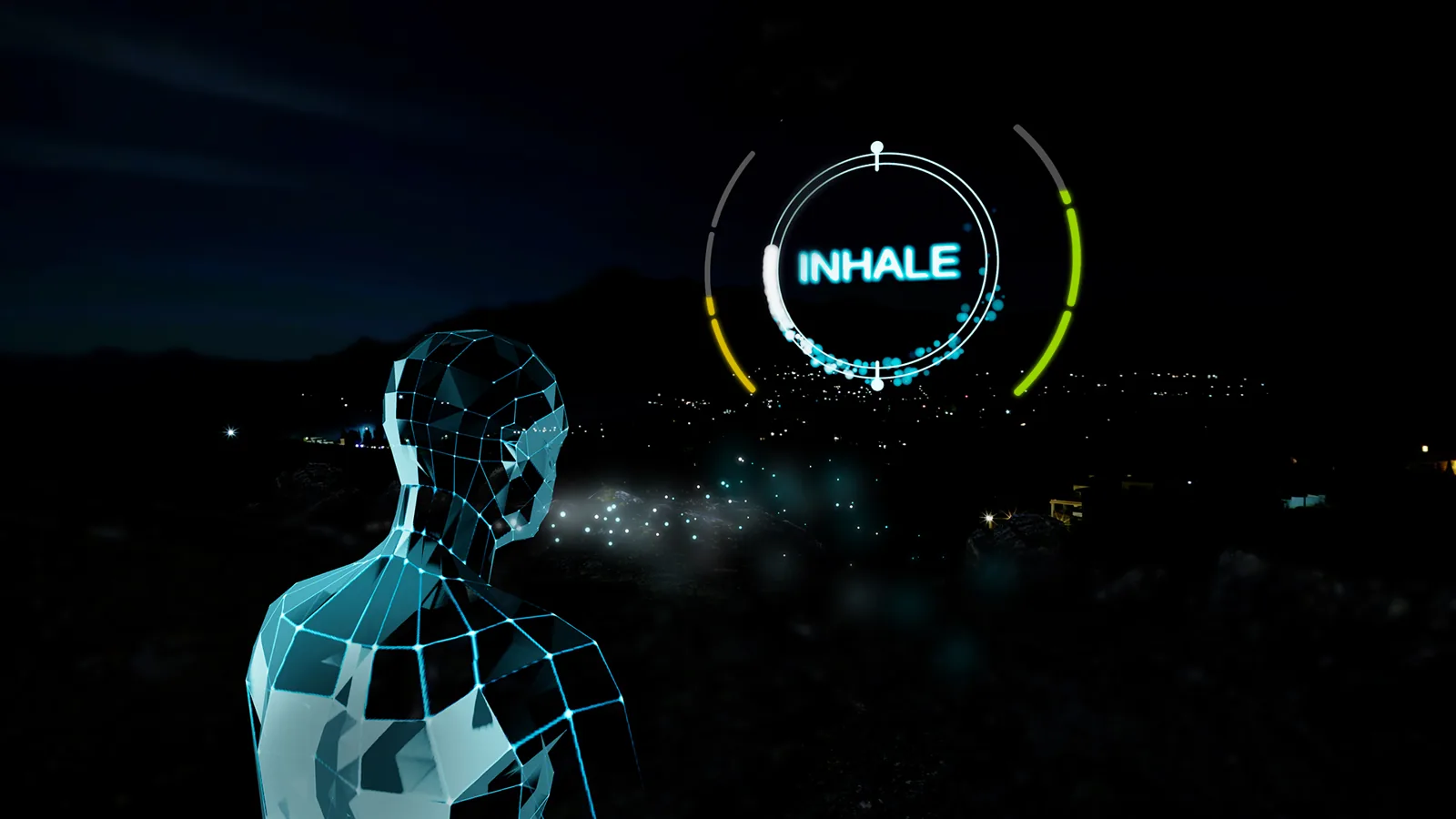
The same headset and sensors run BreathBook for paced breathing and PMR for progressive muscle relaxation, so the work after the test is recorded the same way as the test.

BreathBook: the breathing circle showing INHALE above a night landscape

Questions people ask about Stressonika →

See a sample report on a demo call.