
Module · work with a specialist
EMDR, with the room switched off.
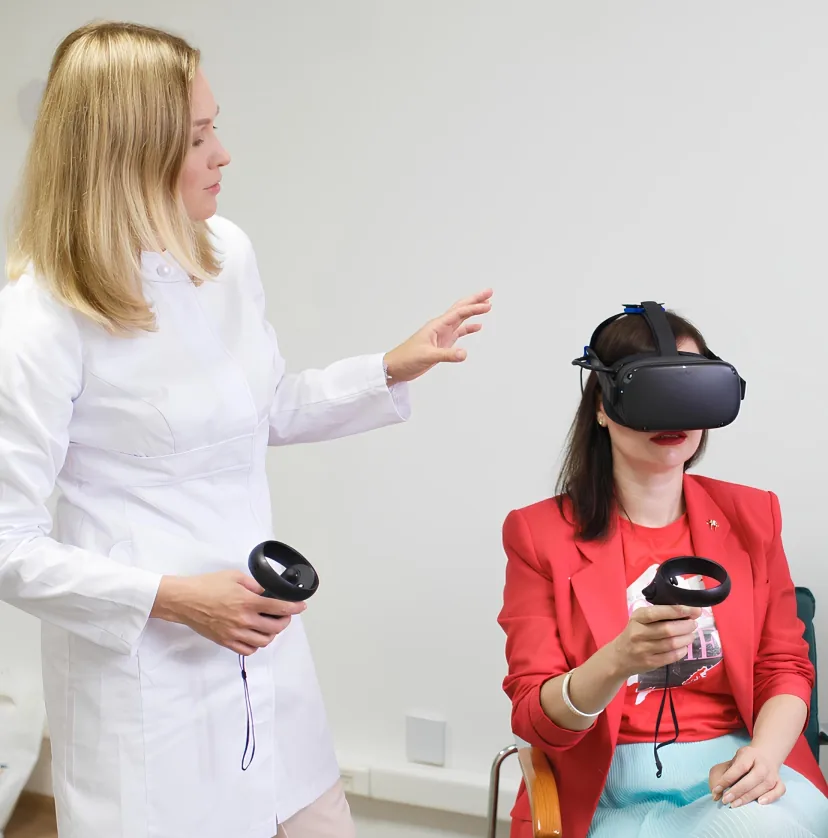
A virtual-reality application for Meta Quest that runs the EMDR method. Unlike a session in an office, the person is immersed in a virtual setting and shielded from everything around them. With CleverPoint 4 on the headset, the specialist sees the person's physiology in CleverLab for the whole session.
Not for use on your own. The whole session runs with a specialist, a psychologist or psychotherapist, who sits beside the person and leads the process.
The method
EMDR, Eye Movement Desensitization and Reprocessing, is a structured method of psychotherapy developed by Francine Shapiro. The person holds a distressing memory in mind while bilateral stimulation runs: eye movements from side to side, alternating sounds, or alternating touches. In an office session one of these is used at a time. Here all three run together. The World Health Organization has listed the method in its guidelines since 2013.
Why in VR
- The person is shielded from the room: no window, no door, no one passing by.
- Sight, sound and touch are stimulated at once, in sync, with no extra equipment.
- The specialist sees on the PC what the person sees in the headset, and can comment at any moment.
- With CleverPoint 4, the body's response is on the same screen, stage by stage.
Preparation
A safe place and a working place
The person picks two settings from a set of 360° panoramas:
- the safe place, where they feel calm and safe;
- the working place, where they are comfortable doing the exercises.
The safe place is the main menu and the base of the session. Work starts there. If the person feels uncomfortable, they can return there at any moment and then resume the exercise.
Choosing the target
- A memory to work with: one of the common ones, or their own. Their own can be dictated by voice; the app turns it into a short written summary.
- The negative belief that comes up with the memory: from the list, or their own.
- The positive belief they want in its place: from the list, or their own.
- How much the memory disturbs them right now, from 1 to 10 (SUD).
- How much they believe the positive belief, from 1 to 7 (VOC).
- Where in the body they feel tension or discomfort, if anywhere, marked on a body map.
The processing cycle
- 1
Bilateral stimulation
Sight, sound and touch at once. A sphere moves left and right along changing paths in front of the person's eyes; bells ring in the left and right ear in turn, in sync with it; the controllers in their hands vibrate. Text prompts say how to behave and what to focus on.
- 2
Breathing
A few breaths in and out.
- 3
Feedback
The person tells the specialist what they noticed.
Then the person returns to the memory: keeps working with it or edits it, and rates their state again. If the rating is still unsatisfying, the next cycle begins. Cycles repeat until the rating changes or the specialist adjusts the course of the session.
The specialist's seat
The specialist is beside the person for the whole session. On their PC they see a live view of what the person sees in the headset and comment when needed.
They control the parameters of the exercise, including:
- the amplitude and speed of the sphere;
- the strength of the controller vibration;
- the length and settings of the breathing stage.
Physiology with CleverPoint 4
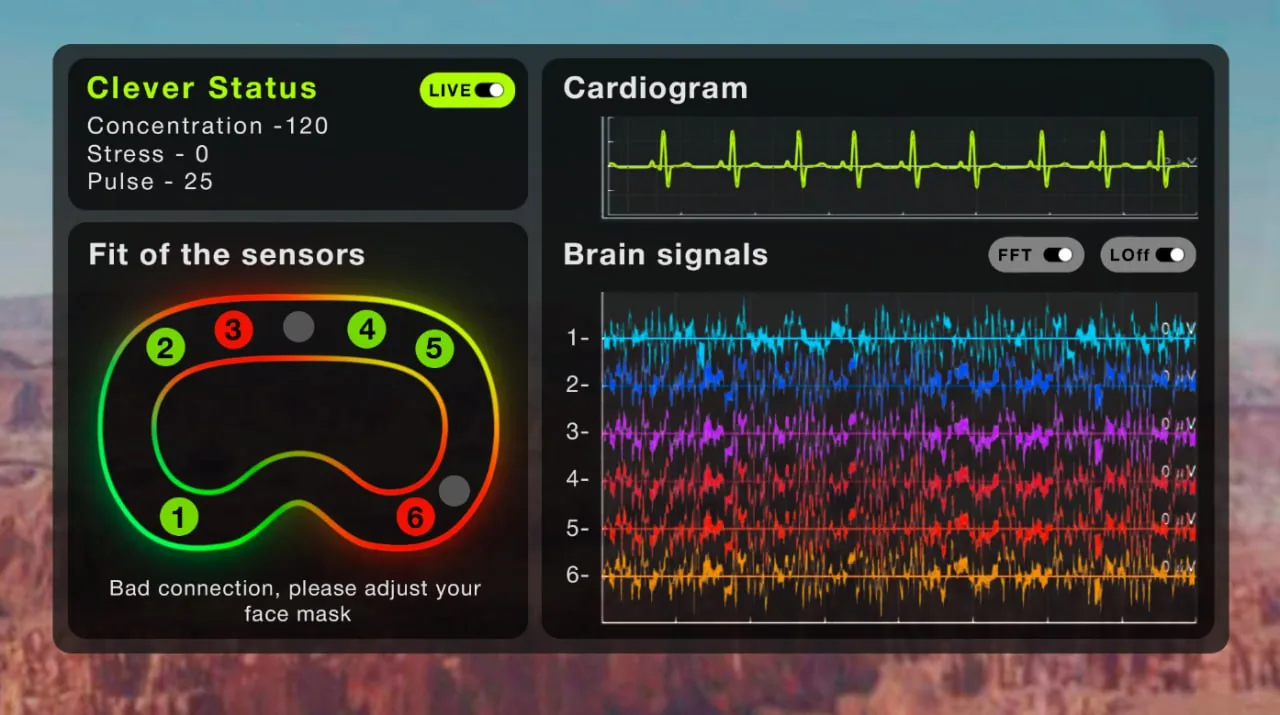
During the session the person wears CleverPoint 4. Their physiology is shown in real time in CleverLab on the specialist's PC, next to the live view from the headset. The specialist sees not only the person's own ratings but the body's response at every stage. CleverLab also produces reports on the physiological state.
Availability and packages for the EMDR module: ask us or order a quote. The same headset and sensors run Stressonika, BreathBook and PMR.