
Let us give another example of an excessive autonomic reaction to completing the battery of tests in Stressonika (Fig. 3.31).
The quality of the ECG recording is good for almost the entire time (with the exception of short-term defects highlighted in the figure by red ovals), which gives us the opportunity to rely on the HRV indicators calculated by the CleverView program during the consultation based on the report.
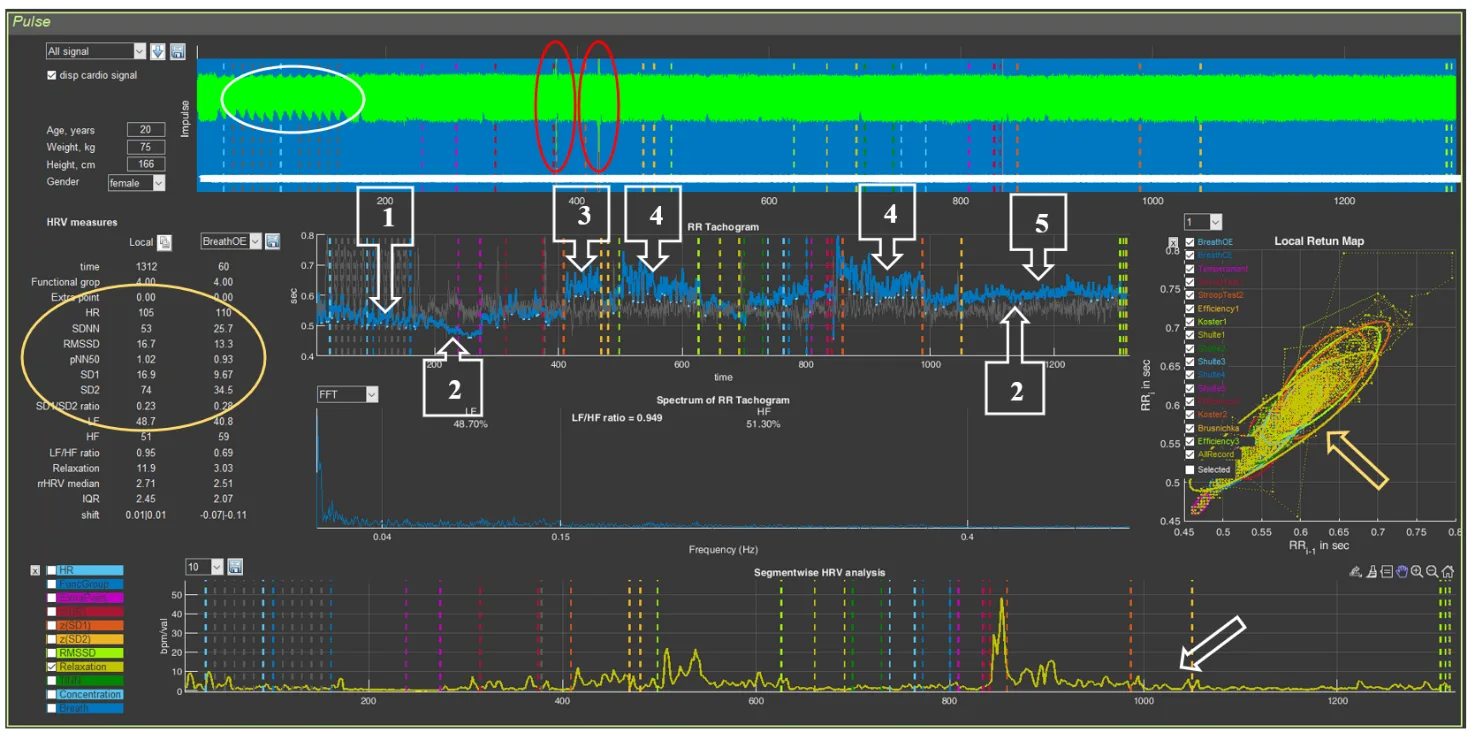
Figure 3.31. The respondent’s “Cardio domain” page (Example 4)
With a holistic perception of the “Cardio domain” page, the following points can be highlighted: 1. a state of pronounced anxiety, which manifested already at the beginning of the test and persisted throughout the VR session in the form of tachycardia (see the HR values in Fig. 3.31 in Sector 3); 2. extremely low heart rate variability, which manifests as a narrow shape of the CIG, elongated ovals of the scatter plots (yellow arrow) and is emphasized by the HRV indicator values (highlighted by a yellow oval in the figure); 3. an uncharacteristic reaction in the form of a slowing of the heart rhythm during the performance of a test associated with cognitive tension; 4. during the rest stages, HR decreases, but does not reach values characteristic of the norm (the mean cardiac-cycle duration is about 0.65 s, which corresponds to 92 beats/min); 5. during the last test, the respondent’s functional state stabilized, but at the level of about 100 beats/min. All this logically fits into the extremely low values of such an indicator as the rest state (in Fig. 3.31 in Sector 8 it is indicated by a white arrow).
Let us consider in more detail the stage with controlled slow breathing (Fig. 3.32).
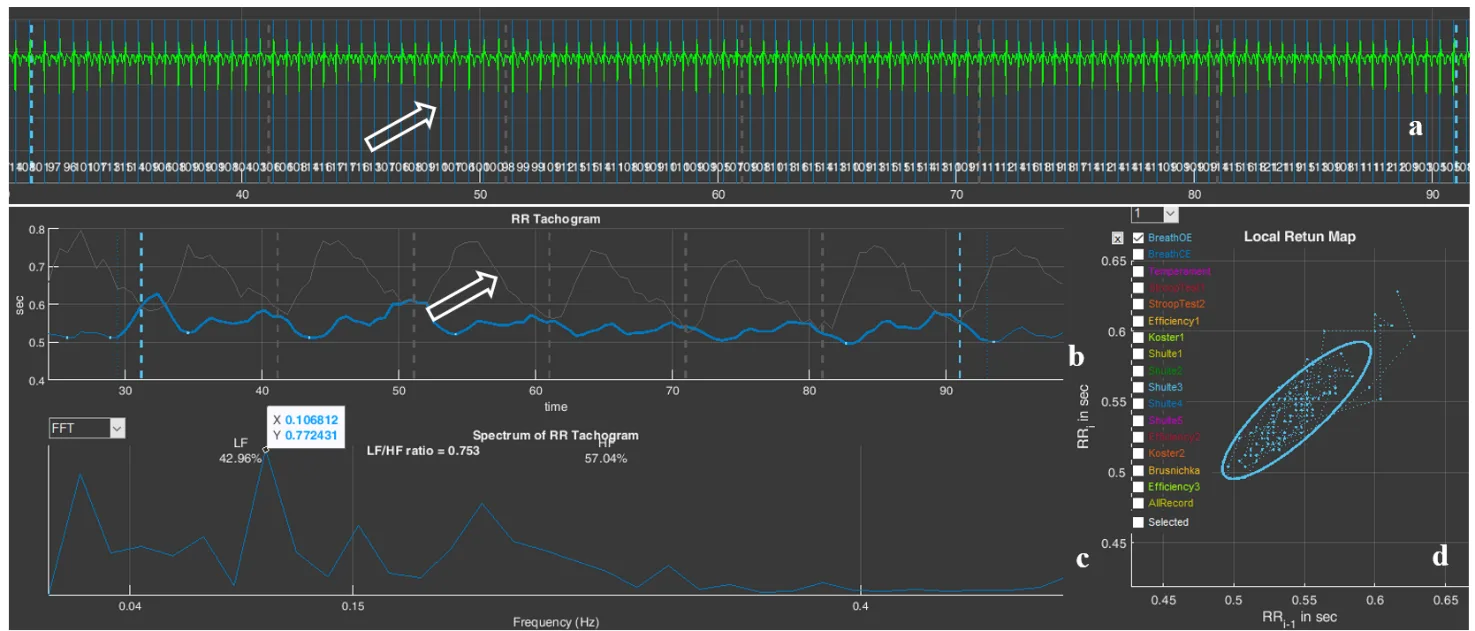
Figure 3.32. The respondent’s “BreathCE” stage (Example 4): a – cardiointervalogram; b – spectrogram; c – scatter plot
The slow breathing proposed in Stressonika should “swing” HRV. However, in our example, the range of RR-interval values is extremely modest (Fig. 3.32b). At the same time, such indicators as the position of the spectrogram peak along the horizontal axis in the zone corresponding to 6/min (Fig. 3.32c) and the dynamics of the R-wave amplitude (Fig. 3.32a), which is more clearly illustrated by the R-wave envelope (the gray line in Fig. 3.32b), indicate that the respondent was breathing in the rhythm set in the test. Consequently, the low HRV values can be associated with excessive activity of the sympathetic nervous system, and the respondent’s state can be assessed as stress.
The formation of the curve enveloping the R waves depends greatly on the position of the heart, the person’s anthropometric data, the specifics of the electrophysiological processes in the cardiac muscle, and other reasons; therefore, it does not always reflect such a phenomenon as respiratory arrhythmia as convincingly as in this example. This should be kept in mind in order not to draw false conclusions if the gray line in Sector 5 is disorganized, and to use it as a reference when it forms a clear contour that depends on the respiratory movements of the chest.
The reaction in the form of a slowing of the heart rhythm during the performance of a test associated with cognitive tension also indicates excessive anxiety from the testing procedure itself. In such cases, completing the test becomes a push toward a more balanced emotional response.
Let us look into the report (Fig. 3.33). CleverView information is an excellent illustration of the information that is formed in the report, only not in terms that are not always clear to the respondent, but in indicators of their individual bodily reaction. We note high work efficiency against the background of a pronounced stress reaction and the blue background of the personal marker. Our respondent is among that cohort of people for whom stress is a stimulating background for successful work. Will they be able to work productively for a long time in such a mode? The question is rather rhetorical.
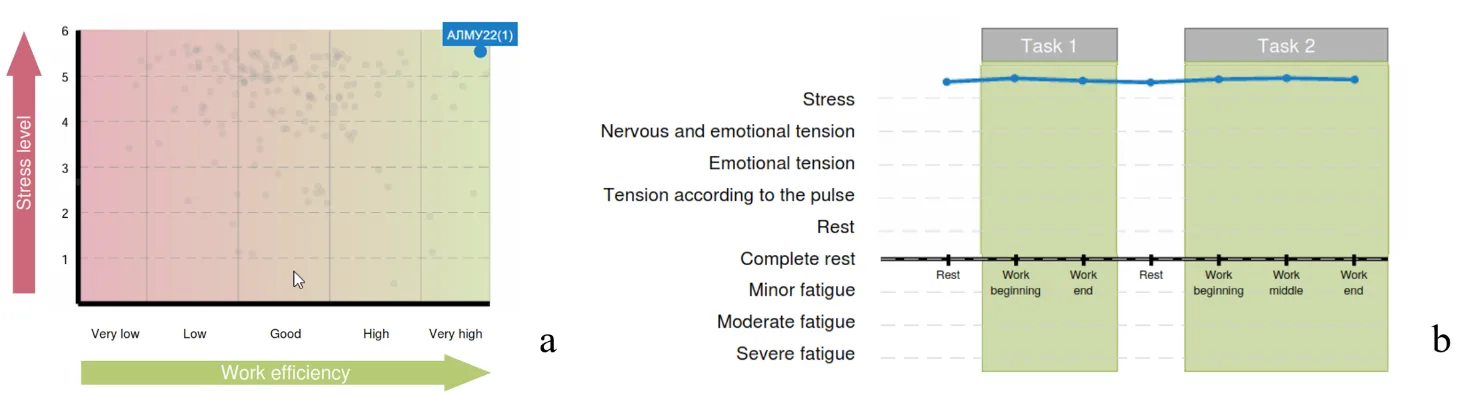
Figure 3.33. Diagrams of Chapter 3 of the report (Example 4): a – the functional type of performance support; b – the respondent’s functional states in the process of performing test tasks
One can also look into Sector 2 of the “Cardio domain” page. 20 years old, BMI = 27.2. Is there something to discuss with the respondent? Of course!